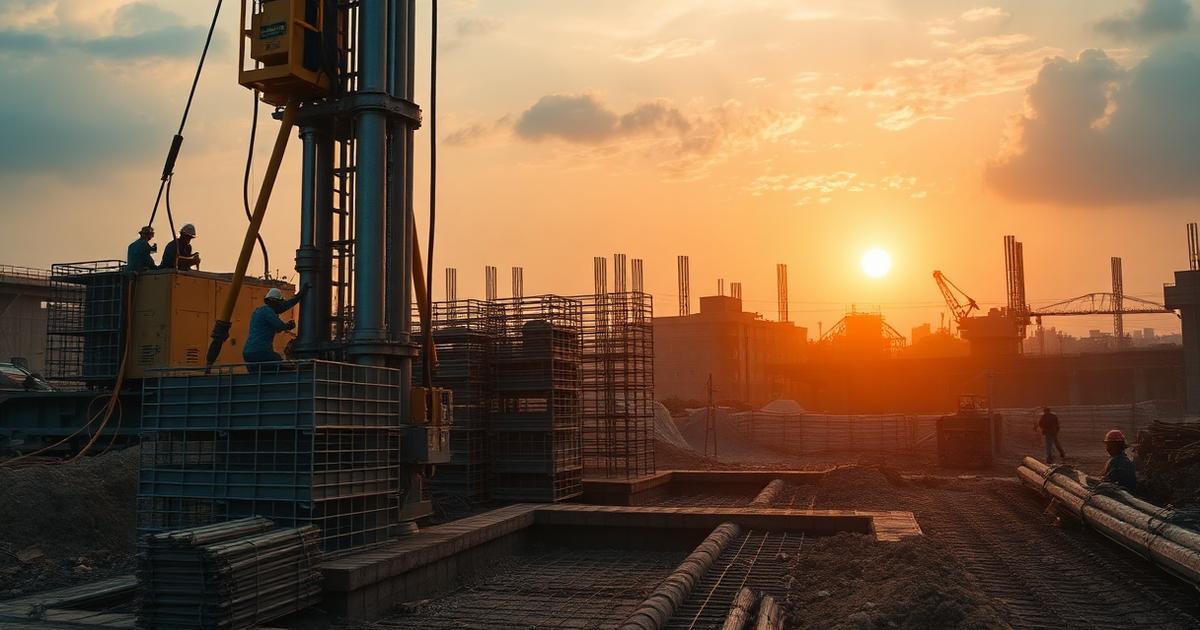
If you're a builder, architect, or developer evaluating pile foundation options in Chennai, you already know the stakes. The foundation stage is the one part of a project you cannot afford to get wrong — and once concrete is poured, correcting a mistake below ground is far more expensive than correcting one above it.
This guide is written to help you make that decision with confidence. It covers the three piling methods most commonly used in and around Chennai — bored cast in-situ piling, driven cast in-situ piling, and rotary hydraulic piling — how soil investigation determines which one you need, and what to look for in a pile foundation contractor in Chennai before you sign a contract.
It's written by Jai Sudhakar, Proprietor of Sri Saai Pile Foundation, based on hands-on experience delivering pile foundation projects for residential, commercial, and industrial developments across Chennai.
Why Chennai Projects Depend So Heavily on the Right Piling Method
Chennai's construction sites sit on some of the most varied — and challenging — soil conditions in South India. Coastal belts around the East Coast Road and OMR carry sandy, loose, and often waterlogged strata. Inland areas toward Kolapakkam, Porur, and the western suburbs frequently sit on soft clay or filled ground left over from decades of rapid urban expansion. Older parts of the city may have reclaimed low-lying land with a high water table year-round.
None of these soil types can reliably support heavy structural loads at shallow depth. That's why pile foundations — which transfer load down to a stronger, deeper stratum — have become the standard for anything beyond a single-storey structure in most of the city.
But "pile foundation" isn't one single technique. The method matters as much as the decision to pile at all. Choosing the wrong type for your site's soil profile can mean reduced load capacity, longer-term settlement risk, or unnecessary cost. This is where an experienced local contractor — one who has actually worked the soil in your specific part of Chennai — makes the difference between a foundation that performs and one that becomes a liability.
Soil Investigation: The Step That Decides Everything Else
Before any piling method is chosen, a proper soil investigation has to happen. This typically involves:
- Boring and sampling at planned pile locations to understand soil layering at depth
- Standard Penetration Testing (SPT) to assess soil density and bearing capacity at various depths
- Water table assessment, which is critical in much of Chennai given seasonal and coastal groundwater behavior
- Identification of the bearing stratum — the depth at which soil or rock becomes strong enough to support the structural load
Skipping or rushing this step is one of the most common — and costly — mistakes on construction sites. A soil report isn't paperwork; it's the engineering basis for every decision that follows, including pile type, pile length, pile diameter, and the number of piles required per column.
At Sri Saai Pile Foundation, soil investigation findings (either commissioned directly or provided by the client's geotechnical consultant) are read closely against site conditions before any equipment is mobilized. Recommending a piling method without this step isn't something a serious contractor should do.
Bored Cast In-Situ Piling: When and Why to Use It
Bored cast in-situ piling is one of the most widely used deep foundation techniques for medium to large structures in Chennai. The process involves boring a hole into the ground to the design depth, then casting concrete (with reinforcement) directly inside that bore to form the pile in place.
Advantages of Bored Cast In-Situ Piling
- Suitable for a wide range of soil conditions, including layered or mixed strata common across Chennai
- Minimal vibration and noise, making it a strong choice for sites near existing structures, in dense residential neighborhoods, or where vibration-sensitive buildings are nearby
- High load-bearing capacity, especially useful for multi-storey residential and commercial buildings
- Flexible pile diameter and depth, allowing the design to be tailored precisely to the soil report
Where It's Typically Used
Bored cast in-situ piling is a common choice for apartment complexes, commercial buildings, and sites in built-up areas of Chennai where neighboring structures make vibration-heavy methods risky. It's also frequently specified where soil layering is inconsistent and a more controlled, verified boring process is preferred over driven methods.
Driven Cast In-Situ Piling: When and Why to Use It
Driven cast in-situs piling (DMC — Driven Cast-in-Situ) takes a different approach. A casing is driven into the ground using impact or vibratory force, displacing soil as it goes, and concrete is then cast inside the casing as it's withdrawn.
Advantages of Driven Cast In-Situ Piling
- Faster installation in suitable soil, which can shorten project timelines
- Soil compaction benefit — the driving process compacts surrounding soil, which can increase load capacity in loose or sandy strata
- Cost efficiency on larger sites with consistent soil conditions and open working space
- Proven performance across residential and industrial developments where vibration is not a major site constraint
Where It's Typically Used
Driven cast in-situ piling works well on open sites — industrial sheds, factory developments, and larger residential projects — where there's enough clearance from neighboring structures to accommodate the vibration and impact involved in the driving process, and where the soil profile favors displacement piling.
Rotary Hydraulic Piling: When and Why to Use It
Rotary hydraulic piling uses hydraulic rotary rigs to bore through soil — including harder strata, weathered rock, and mixed formations — with high precision and control. This method has become increasingly relevant in Chennai as projects push into areas with harder subsoil layers or where very large-diameter, high-capacity piles are required.
Advantages of Rotary Hydraulic Piling
- Handles harder and mixed soil-rock strata that other methods struggle with
- High precision in verticality and positioning, important for tightly spaced pile groups
- Suitable for large-diameter, deep piles needed for heavy commercial and industrial structures
- Reduced disturbance to surrounding soil compared to displacement methods
Where It's Typically Used
Rotary hydraulic piling is typically specified for larger commercial towers, industrial structures with heavy load requirements, and sites where soil investigation reveals harder strata or rock closer to the surface than expected — situations where bored or driven methods alone may not be sufficient.
Bored vs. Driven vs. Rotary Hydraulic: A Quick Comparison
| Factor | Bored Cast In-Situ | Driven Cast In-Situ | Rotary Hydraulic |
|---|---|---|---|
| Best suited for | Layered/mixed soil, sites near existing structures | Open sites, loose/sandy soil | Hard soil, rock strata, large-diameter piles |
| Vibration impact | Low | Higher | Low |
| Typical use case | Apartments, commercial buildings in dense areas | Industrial sheds, open residential sites | High-rise commercial, heavy industrial |
| Soil compaction benefit | No | Yes | No |
| Precision on hard strata | Moderate | Lower | High |
The right choice always comes back to the soil investigation report and the specifics of your site — which is why this decision should be made in consultation with an experienced piling contractor, not chosen off a checklist.
What to Look for in a Pile Foundation Contractor in Chennai
Not every contractor offering "pile foundation services" has the equipment, crew experience, or track record to execute all three methods correctly. Before hiring, it's worth asking:
- Do they offer soil investigation or work closely with your geotechnical consultant before recommending a method?
- Do they have in-house equipment for bored, driven, and rotary hydraulic piling — or will they subcontract critical work to a third party?
- Do they conduct pile load testing to verify capacity before construction proceeds?
- Can they show a track record across residential, commercial, and industrial projects in Chennai specifically — not just piling experience elsewhere?
- Do they follow documented safety and quality protocols on site?
Why Builders and Developers Choose Sri Saai Pile Foundation
Multi-method capability under one contractor. Sri Saai Pile Foundation executes bored cast in-situ piling, driven cast in-situ (DMC) piling, and rotary hydraulic piling — meaning the method is chosen based on what your soil and structure actually need, not limited to whichever single technique a contractor happens to own equipment for.
Local Chennai soil experience. Years of piling work across Kolapakkam and the wider Chennai metropolitan region — from coastal to inland soil profiles — means recommendations are grounded in real, site-specific experience rather than generic assumptions.
Soil investigation taken seriously. Every project starts from the ground truth of the soil report, not a default method applied regardless of site conditions.
In-house, well-maintained machinery. Piling rigs and equipment are maintained and operated by an experienced crew, reducing delays and keeping output consistent across bored, driven, and rotary hydraulic work.
Load testing as standard practice. Piles are tested to verify design capacity before construction proceeds further — a safeguard that protects the client's investment and the long-term integrity of the structure.
A track record across sectors. From residential apartment developments to commercial buildings and industrial sites, Sri Saai Pile Foundation has completed pile foundation projects across Chennai using modern piling equipment and quality construction practices — under the direct oversight of Proprietor Jai Sudhakar.
Who This Service Is For
- Builders and civil contractors managing multi-storey residential or commercial projects
- Architects and structural engineers who need a reliable execution partner for foundation design specifications
- Industrial and commercial developers with heavy load-bearing requirements
- Homeowners building independent houses on sites with soft, sandy, or reclaimed soil
If your project falls into any of these categories and your site is in or around Chennai, choosing the right piling method — and the right contractor to execute it — is not a step to shortcut.
Get a Free Site Inspection
Deciding between bored cast in-situ piling, driven cast in-situ piling, and rotary hydraulic piling shouldn't be guesswork. The right answer depends on your soil, your structure's load requirements, and your site constraints — and that's best assessed in person.
Call Sri Saai Pile Foundation today to schedule a free site inspection and get a quotation for your pile foundation project in Chennai. Whether your site calls for bored, driven, or rotary hydraulic piling, the recommendation you get will be based on what your soil actually needs — backed by soil investigation, in-house equipment, and load testing to verify the result.